


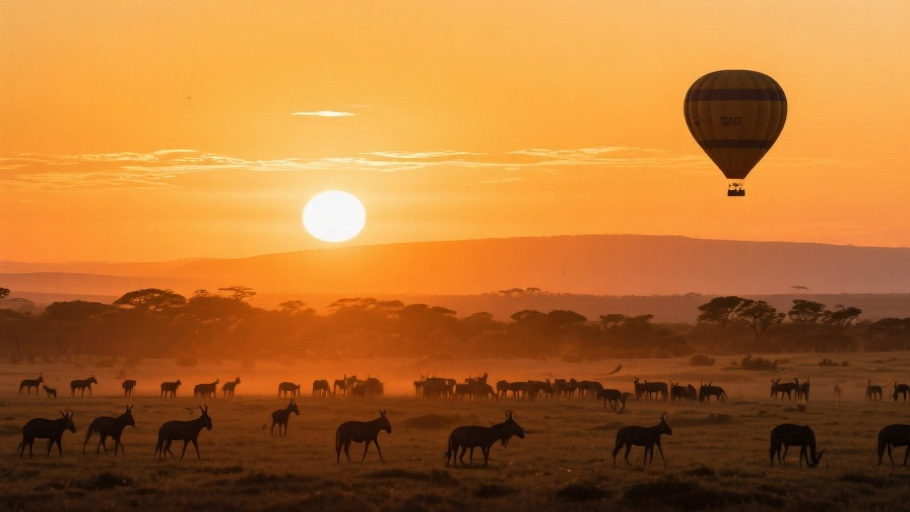
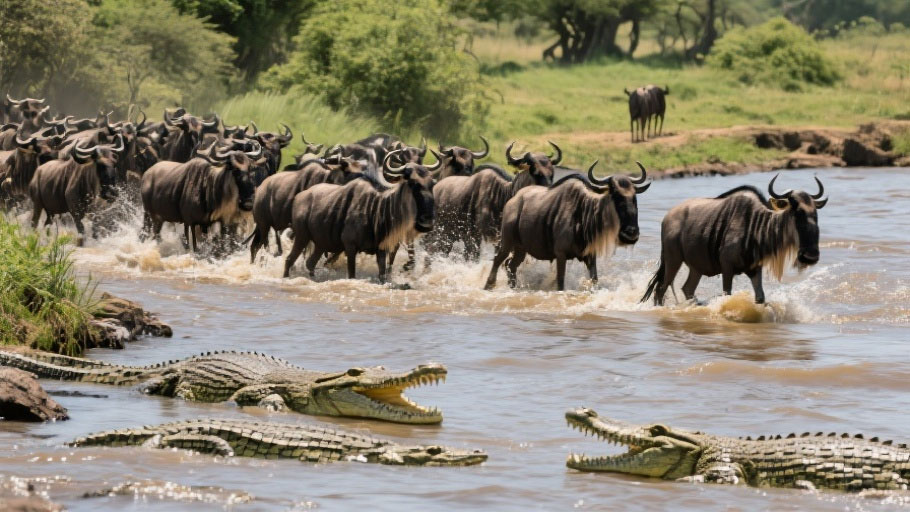

Therefore, it comes as no surprise that this unforgettable experience is one of the primary reasons for tourists to go to Tanzania every year. If the wildebeest migration in Serengeti National Park is also on top of your to-see-list, it’s important to know where the herds are.
That’s why we want to tell you
- when and where the Great Wildebeest Migration occurs month-by-month,
- the best time to watch the migration,
- the best place to see the migration and
- tips for the most intense experience.
QUICK FACTS ABOUT THE GREAT WILDEBEEST MIGRATION
- The Great Wildebeest Migration is the largest animal migration in the world, with almost two million animals crossing the Tanzanian plains each year.
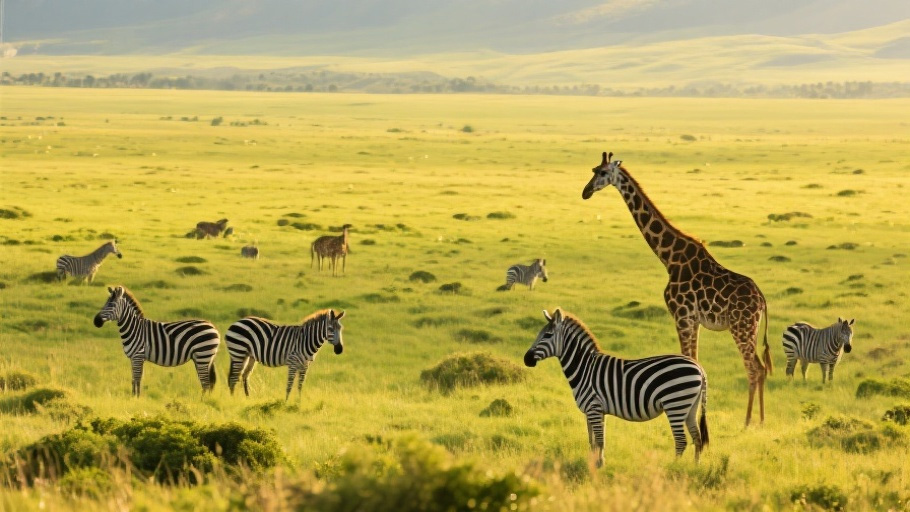
- Although named after wildebeests, which make the majority of animals, the migrating herds also include zebras, topi, gazelles, and other animals.
- The migration typically begins in December and lasts until November, although its beginning depends on the start of the rainy season in Tanzania.
- The herds cover approximately 1,000 kilometers during the migration cycle.
- Up to 250,000 wildebeests are killed by predators during the migration.
- Migrating wildebeests divide into herds of hundreds of thousands of animals.
WHEN AND WHERE IS THE GREAT WILDEBEEST MIGRATION?
Here’s the trick – the exact timing of the Serengeti wildebeest migration depends upon the rainfall patterns each year. This makes predicting where and when the migration begins. It’s something not even wildebeests know!
Due to climate changes, the rainy seasons haven’t been occurring regularly, nor are they easily predictable. That’s also why the migration has been thrown out of synch in recent years.
However, thanks to our experienced Tanzania Specialist guides, we are able to make a fairly accurate prediction. This is one of the main reasons why our Tanzania safaris are so popular for everyone who wants to see this spectacle with their own eyes.